

Search engine optimisation (or SEO) is a game-changer for small businesses.
It is the behind-the-scenes powerhouse that elevates a website to a whole new level. Establishing a strong online presence is a necessity to stay afloat and SEO can make the difference between an SME taking off or not.
So, this blog aims to decode the complexities of SEO for small business owners.
Whether you’re a business owner with a marketing background or completely new to the digital game, we’ll aim to simplify the intricacies of SEO, providing insights to help your small business thrive.
What is small business SEO?
Small business SEO is all about optimising your online presence to boost visibility on search engines like Google, Yahoo and Bing, without spending on paid advertising.
The primary aim is to increase the likelihood of your business website appearing on the coveted first page when potential customers search for products or services related to your offerings.
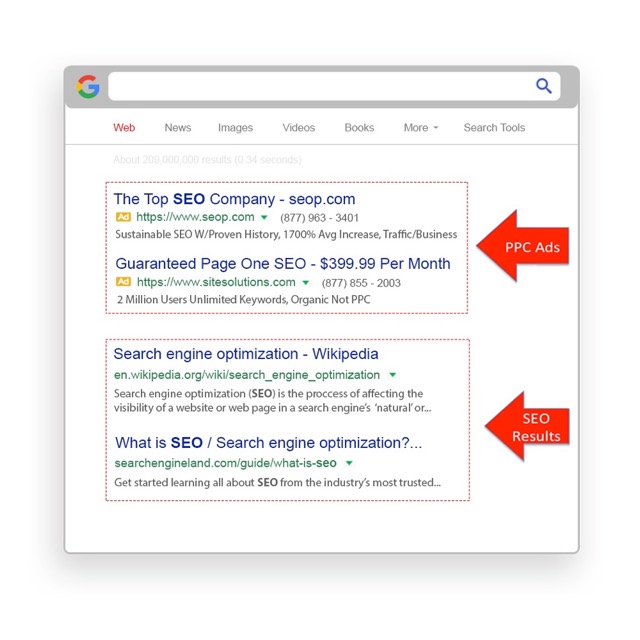
SEO draws in natural ‘organic’ traffic without the need for paid ads, through a variety of techniques. These optimisation tricks of the trade help search engines determine that web pages are delivering a high-quality user experience that’s tailored to the search term they entered.
Small businesses can assist in this process through the likes of…
- Keyword optimisation: Identifying and then using relevant keywords in website content, meta tags and other elements to align with what users are searching for.
- Local SEO: Enhancing visibility for local searches by optimising business listings on platforms like Google My Business.
- Link building: Acquiring high-quality backlinks from reputable websites to improve the website’s authority and credibility in the eyes of search engines.
- On-page content creation: Writing interesting and relevant copy that caters to the needs of your target audience, establishing the business as an authority in its industry.
- User experience optimisation: Ensuring that a website is user-friendly, loads in double quick-time and is mobile-responsive.
- Analytics and monitoring: Using tools like Google Analytics to track website performance and make data-driven decisions.
The benefits of small business SEO
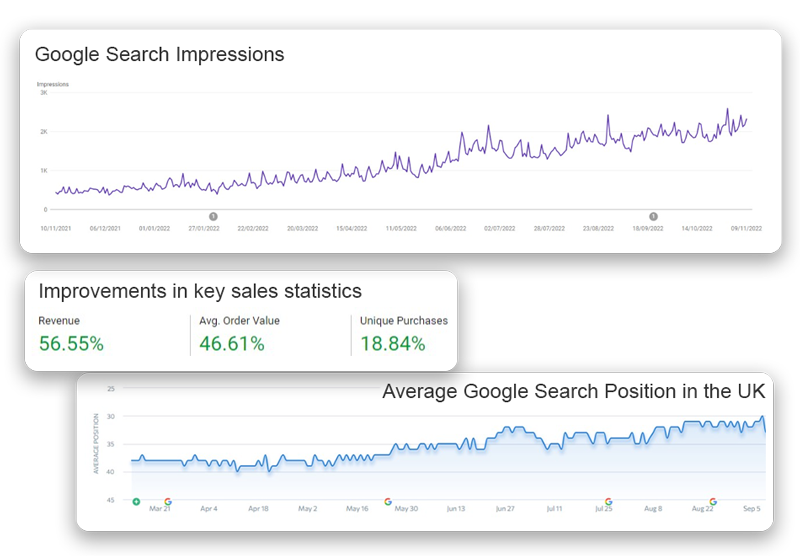
Search engine optimisation opens up a range of benefits for fledgling businesses. It’s a strategic move that can positively influence your online presence and business success, from boosting awareness of your service offering, to building trust with potential customers and fostering targeted growth.
Let’s take a closer look at how small businesses that invest in SEO can pave the way for lasting success:
- Increased online visibility: SEO helps small businesses improve their visibility on search engine results pages (SERPs), which makes it far more likely for potential customers to discover your businessin the first place.
- Targeted traffic: By optimising for specific keywords related to your business, SEO attracts targeted traffic. Meaning that visitors reaching your site are more likely to be the right kind of people – ie those interested in your products or services. In turn, this increases your chances of conversion.
- Cost-effectiveness: Compared to paid advertising (such as Google Ads, Facebook/Instagram, LinkedIn or YouTube for example) SEO is a much cheaper strategy for small businesses with restricted budgets. Once your website is fully optimised, the ongoing maintenance costs of SEO are surprisingly minimal – simply keep producing awesome content and get that consistently shared!
- Builds credibility: Websites that appear at the top of search results thanks to focused SEO efforts are often perceived as more trustworthy by users. Those that produce helpful content that addresses reader pain points create brand trust – especially if they give away that insight for free!
- Better user experience (UX): SEO involves improving various aspects of your website, such as site structure, navigation and content quality. This not only aids search engines in better understanding your site, but also enhances the overall UX. Which in turn means more leads and more sales from happy customers who found what they needed on your website with minimal effort.
- Adaptability to market changes: SEO strategies can be adjusted based on several factors, including market changes, shifting user behaviours and algorithm changes. As such, small businesses can always stay relevant, whatever situation may arise.

How is local SEO different to small business SEO?
Let’s be clear here. Local SEO is not the same as SEO for small business (though it can certainly help companies with a small geographical footprint!)
While Local SEO and small business SEO may seem similar in their shared objectives of reaching target customers and improving search rankings, they differ significantly in their strategic approaches: While both strategies are important, the option you go for will depend on the nature and goals of your business.
Local SEO primarily targets a specific geographic area. The goal is to optimise a business’s online presence to attract local customers and is crucial for businesses that rely on brick-and-mortar stores or cater to an audience within a certain region.
First and foremost, local businesses should make the most of Google My Business, which involves creating a profile, providing essential information such as business name, address, phone number, website and hours of operation. Then, when users search for your business on Google or Google Maps, the information from your Google My Business listing is displayed, helping customers find accurate and up-to-date details about the business’s location and services.
Secondly, there should be an emphasis on integrating location-specific keywords into blogs, landing pages and meta tags. Other tips include encouraging online customer reviews and building backlinks from authoritative local sources such as community websites and newspapers to gain traction.
SEO optimisation for small businesses extends its reach broader, to a diverse range of enterprises, from nationwide e-commerce stores to software companies and everything in between.
Unlike local SEO, which is more geographically focused, SEO for small companies, aims to improve the website’s visibility on a national or international scale. It’s about finding ways for small companies to compete with larger players with bigger budgets.
For instance, within content, a mix of longer-tail, more niche keywords relevant to the business’s offerings might be used – regardless of location – that demonstrate topical authority on a specific subject.
We’ll cover the techniques involved in more detail below.

5 tips to get started with SEO for your small business
1. Find the right keywords
Keyword research is a foundational step in constructing a robust SEO strategy tailored to the needs of your small business.
This intricate process involves using specialised keyword research tools to identify and assess search terms closely associated with the products, services or information your business provides.
Essentially, keywords inform Google what each of your web pages is about and signal the nature of your business activities, so they need to be as targeted as possible.
As part of the analysis, use advanced keyword research tools such as:
Or if you’re running Google Ads, you can hop into the Keyword Research tool there.
Each tool will tell you a (very approximate) search volume per month and identify any trends associated with specific terms. So you have a clearer idea of the optimal keywords and phrases to use.
Think carefully about the terms that potential customers are likely to use when they are close to making a buying decision and comparing solutions. But also consider the terms they’d use when they have a problem you can solve, but aren’t yet actively looking for a product to solve their woes.
These are the keywords you should build as key pillars in your content.
Short-tail keywords (typically one to three words) typically have higher search volumes and target more consumers, but the downside is that they also face competition from similar businesses in a crowded marketplace. They are considered ‘broad’ as less specific and small businesses can face stiff competition from large organisations here.
So be sure to spend time on long-tail keywords. These are more detailed phrases that target individuals based on a search for something very specific (often four words and longer).

2. Fix technical SEO errors
It’s essential to recognise that under-the-radar technical SEO glitches could be holding back the full potential of your efforts.
Some of the most common errors to be aware of include:
- Crawl errors: Addressing crawl errors is crucial for optimal website performance. Utilise tools like Google Search Console to identify and rectify these issues. Additionally, ensure that your website’s robots.txt file is accurately configured, granting search engine crawlers access to essential pages.
- XML sitemap: Check that your XML sitemap is up to date, includes all relevant pages and is free of errors before submitting to search engines.
- Duplicate content: Identify and resolve any duplicate content issues on your website with the use of canonical tags.
- SSL certificate: Ensure your website has a valid SSL certificate to provide a secure browsing experience for users and to comply with search engine preferences.
- URL structure: Use SEO-friendly URLs that are descriptive and easy to understand.
- Broken links: Regularly check for broken links and fix them promptly, with the use of tools like Screaming Frog or Google Search Console.
- Page loading speed: Your website should load in a matter of seconds. On average, it should take no longer than 2.5 seconds to load. Any longer, and it increases bounce rates, which negatively improves on search engine rankings. To speed things up, optimise images, control browser caching, use CDNs and defer or minimise unnecessary scripts.
- Secure your website with HTTPS: Ensure your website is fully secure by using the HTTPS protocol, which not only ensures a secure user connection but is also a key ranking signal search engines crawl for.

3. Optimise your website
Tailor your site to meet the requirements of both users and search engines and keep up with evolving algorithms.
This involves a bit of fine-tuning.
From page content to site functionality, you should aspire to achieve not just an attractive design but also optimal performance for a smooth and effective digital experience.
There are various ways this can be achieved, as follows:
- Mobile-friendly design: Did you know that 55% of internet users now access websites through smartphones? With that in mind, a responsive, mobile-first web design suitable for all devices cannot be overlooked. In fact, it’s now a key ranking factor for search engine giants, such as Google to help you stay on top.
- User-friendly design: A clean and easy-to-use website keeps visitors engaged and prevents them from clicking back onto SERPS to browse what your competitors have on offer. Essentially, you want them to remain on your site for as long as possible.
- Organise your content into categories and subcategories, creating a hierarchical structure that makes it quick and easy for visitors to find what they are looking for. Utilise descriptive and concise URLs that provide insight into the content of each page.
- On-page optimisation: Don’t forget to strategically include relevant keywords in page titles and header tags. Craft compelling meta descriptions that briefly describe the content on each page, enticing users to click through from search engine results pages.

4. Create quality content
Wondering what makes content stand out? It’s pretty straightforward.
According to Google…
“Quality content is any written material that gives a solid, informative answer to what a user is searching for.”
Consequently, the more content of this calibre your website produces, the higher its likelihood of securing a top ranking on SERPS.
Heads up: Google is all about helping users find content that benefits them.
Search engines aren’t about to promote your company’s products and services, so don’t get too ‘salesy’ with wording within your content.
Remember that your site’s ranking isn’t set in stone. It can change from week to week, day to day and even minute to minute. But, ultimately, the site with the best-quality content will consistently grab the top spot.
When generating content ideas tailored to your audience and industry, take a moment to consider the following pointers:
- Identify client pain points (the issues they may be looking for a solution to) : Craft content – such as blog posts – addressing each of these pain points and outlining how your firm resolves these concerns.
- Showcase expertise: Highlight what you and your firm excel at in the eyes of your clients and how your expertise can benefit them. Consider creating a comprehensive guide, where you, as the expert, offer valuable advice on topics aligned with your clients’ interests.
- Build trust: Build confidence with a dedicated web page highlighting your company history and expertise. Tailored to resonate with prospective, new and existing clients, this content features engaging narratives, testimonials and insights into your values.

5. Build trust through quality backlinks
In simple terms, backlinking is having reputable websites link to yours. Think of it as getting recommendations from trusted sources. When this happens, search engines view your website as trustworthy, which in turn, makes it easier for people to find you online.
Here’s how you can start building quality backlinks:
- Guest posting: Explore opportunities for guest posting on authoritative websites relevant to your niche. Creating high-quality content that brings valuable information to their audience not only establishes your expertise but also provides an avenue for obtaining valuable backlinks. Guest posts often include an author bio with a link back to your website.
- Partnerships and collaborations: Form partnerships with complementary businesses or influencers in your industry. Collaborative projects and events can lead to natural backlinks as both parties promote and link to the shared content.
- Industry directories: List your business on industry-specific directories (many of which allow you to include a link to your website). But tread with care here, as many directory sites are seen as ‘spammy’ and tarnished by bad practices. So seek out trusted sources and use this tactic sparingly, just to get you started.
- Create shareable content: Develop content within your industry that is shareable and others are likely to link to (such as in-depth studies or infographics). When others find value in your content, they’re more likely to backlink to it within their own content and share it with their networks.
- Monitor and delete unwanted links: Finally, regularly monitor your backlink profile using tools like Google Search Console. Identify and delete any unwanted or spammy links that may negatively impact your website’s credibility.
Boost your small business SEO efforts
Take the reins of SEO for your small business and you’ll watch it soar to unprecedented levels.
But to do so takes time, consistency and patience.
That’s where we come in. You see, we craft bespoke SEO strategies that align perfectly with the setup of your team. Not got time to create content? No problem, let us sort that for you. Got more content than you know with? Let us help you get organised.
By leveraging a keen understanding of search engine algorithms, we’ll ensure that your online presence is not only optimised, but also stands out in the crowded digital landscape.
So, if you’re ready to take your SEO efforts to the next level, let’s talk!
 Joanna Tracey